















Sunglasses
Products
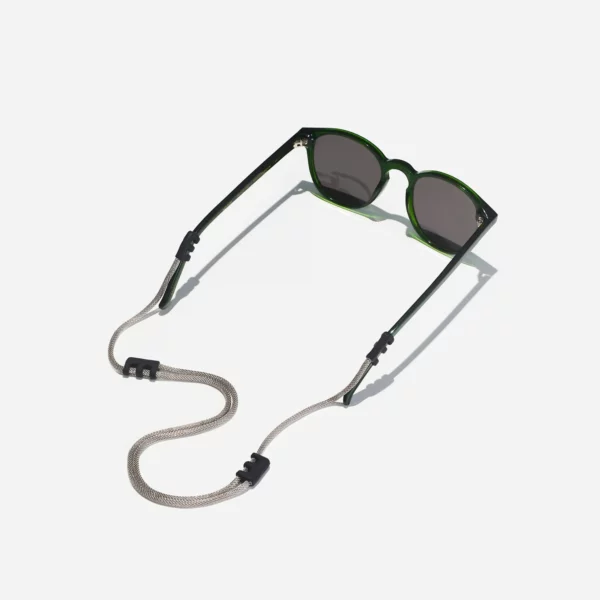
Sunglasses protect your eyes first and complete the look second. What a pair can do is printed small on the arm or on the label.
What does UV400 mean?
The lenses filter UV rays up to a wavelength of 400 nanometres, which covers the whole UVA and UVB range. It has nothing to do with how dark a lens is. A dark lens without a UV filter is actually riskier: your pupils widen and let unfiltered UV in more easily.
Which filter category do you need?
For town, category 2 is enough; by the lake and in the mountains, 3 is the norm. The number from 0 to 4 tells you how much light gets through. Category 4 is meant for glaciers and high altitude and is not suitable for driving, because it lets too little light through.
| Category | Light transmission | Good for |
|---|---|---|
| 0 and 1 | 43 to 100% | overcast days, fashion |
| 2 | 18 to 43% | town, everyday |
| 3 | 8 to 18% | lake, beach, mountains |
| 4 | 3 to 8% | glaciers, high altitude, not for driving |
What matters apart from the lenses?
The fit. The glasses should stay on your nose when you look down, and the arms should not press behind your ears. Polarised lenses cut glare from water and roads, but they can make some screens hard to read.
For days by the water, see Sun Care and Beach & Water; everyday carry bits are under Carry Essentials.
Frequently asked questions
No. Tint and UV protection are two separate things. What counts is the label UV400 or 100% UV protection, on light lenses too.
Rinse them under lukewarm water with a drop of washing-up liquid and dry them with a microfibre cloth. Rubbing them dry drags sand and dust across the lens, and paper tissues scratch as well.
In the snow, yes. Snow reflects a large share of UV radiation, and in the mountains the altitude adds to it. Without protection you risk a painful inflammation of the cornea known as snow blindness.
Still unsure? We will reply within 24 hours. Write to us directly.